—— 要投稿,上万维,轻松学术交流

严正声明

本站非期刊官网,非中介代理,
不向作者收取任何费用!
举报微信:13140028228 冯老师

态度公正、信息求实、投稿自助、使用免费
EcoEnergy(国际刊号)(0A期刊)(目前不收版面费)
国际号刊 - 季刊
  • EcoEnergy(国际刊号)(0A期刊)(目前不收版面费)
  • 复合影响因子:0
  • 知网外文库,维普目次
  •  
  投稿方式:官网投稿
  • 栏目频次
  • 一作占比
  • 单位占比
  • 热词
暂无栏目信息.
暂无一作信息.
暂无单位信息.
暂无关键词信息.
  • 更多

    期刊简介

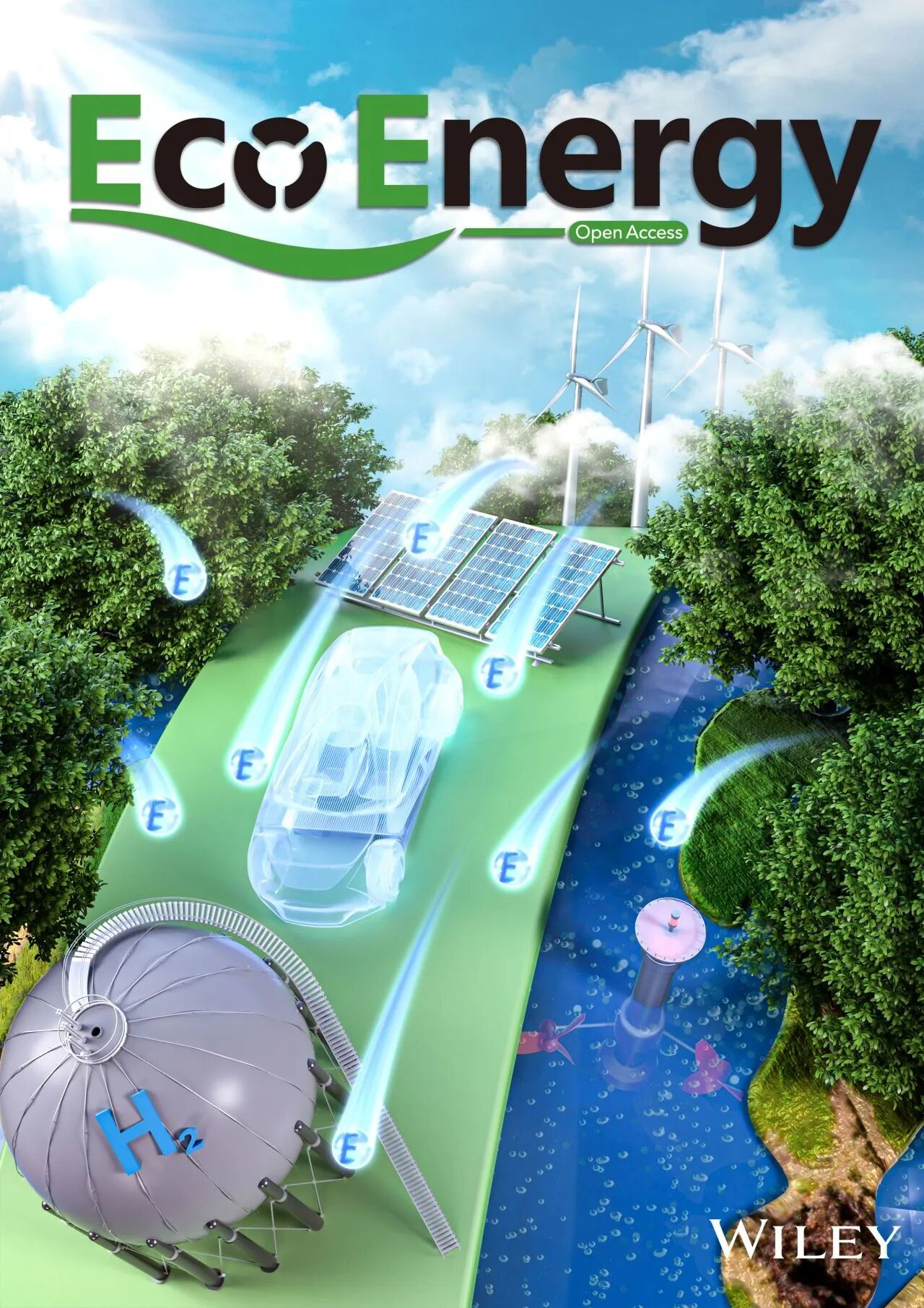
  • 《EcoEnergy》(季刊)是由Wiley与中国化学品安全协会共同主办的一本同行评议、跨学科、高质量、快速出版的旗舰开放获取期刊。主要报道绿色能源与可持续发展相关领域的原创性研究成果,致力于发布环保能源系统的原创性研究成果。

  • 基本信息

  • 期刊名称:EcoEnergy(国际刊号)(0A期刊)(目前不收版面费)
  • 主管单位:
  • 主办单位:中国化学品安全协会
  • 国内刊号:无CN刊号
  • 国际刊号:ISSN 2835-9380;EISSN 2835-9399
  • 出刊日期:
    期刊定价:
  • 邮发代码:
  • 所在省区:山东
    邮政编码:
  • 联系地址:

  • 投稿信息

  • 学科分类:化学
    版面费用:不收版面费
  • 字数要求:0
    查重要求:-
  • 复合因子:0
    综合因子:0
  • 审  稿 费:
    稿费:待核实
  • 本刊可发:
  • 特殊属性:外文期刊

  • 联系方式

  • 投稿网址:https://wiley.atyponrex.com/journal/ECE2
  • 官网网址:https://onlinelibrary.wiley.com/journal/28359399
  • 电话传真:
  • 电子邮箱:editorial@ecoenergy-journal.com(官网)
  • 微信公众号:中国化学品安全协会

审稿时间:暂无参考数据,审稿时间不确定!

投稿难度:网友分享,仅供参考

见刊周期:-

温馨提示以上只是参考信息,实际情况会根据投稿主题、稿件质量和数量、审稿流程有所差异。想获得更准确信息请联系期刊的编辑部进行咨询。

欢迎点评!让信息更透明,使投稿更轻松!
    • 审稿时间:
      是否录用:
    • 发表排期:
      查重要求:
    • 有无课题:
      有无回复:
    • 我的学历:
      我的职称:
    • 审稿费用:
      版面费用:
    • 稿       费:
      稿件字数:
    • 投稿难度:
    • 该刊可发:
    • 投稿主题:
匿名: 验证码: 点击切换验证码
    • 1、该刊只有国际刊号。

      2、投稿方式:在线投稿。

      3、官网网址:

      https://onlinelibrary.wiley.com/journal/28359399

      (主办单位微信公众号信息)

      4、投稿系统:

      https://wiley.atyponrex.com/journal/ECE2

      5、官网邮箱:editorial@ecoenergy-journal.com

      (更多编辑邮箱详见官网信息)

      6、出刊日期:季刊,一年出版四期。

      7、主办单位微信公众号:中国化学品安全协会

      8、官网信息:目前不收版面费。

      2026年1月5日星期一

      Guide for Authors

      【官网信息】

      Please

      refer to this Guide for Authors when preparing manuscripts for

      submission. The online sample copy and current year issues can also be

      used as a guide for style. Contributors should bear in mind the

      interdisciplinary nature of the readership of many journals, and, when

      applicable, emphasize the importance of the topic being presented to the

      research community, extending beyond specialists in the field.

      Submission and Peer Review Process

      New

      submissions should be made via the Research Exchange submission portal.

      You may check the status of your submission at any time by logging on

      to submission.wiley.com and clicking the “My Submissions” button. For

      technical help with the submission system, please review our FAQs or

      contact submissionhelp@wiley.com.

      Documents

      For easier evaluation and speedier processing, please use the following documents whenever possible.

      Manuscript Preparation Checklist

      Manuscript Submission

      Free Format Submission

      We now offer Free Format submission for a simplified and streamlined process for New Submissions.

      Before you submit, you will need:

      Your

      manuscript: this should be an editable file including text, figures,

      and tables, or separate files – whichever you prefer. All required

      sections should be contained in your manuscript, including abstract

      (which does need to be correctly styled), introduction, methods,

      results, and conclusions. Figures and tables should have legends.

      Figures should be uploaded in the highest resolution possible.

      References may be submitted in any style or format, as long as it is

      consistent throughout the manuscript. Supporting information should be

      submitted in separate files. If the manuscript, figures or tables are

      difficult for you to read, they will also be difficult for the editors

      and reviewers, and the editorial office will send it back to you for

      revision. Your manuscript may also be sent back to you for revision if

      the quality of English language is poor.

      An

      ORCID ID, freely available at https://orcid.org. (Why is this

      important? Your article, if accepted and published, will be attached to

      your ORCID profile. Institutions and funders are increasingly requiring

      authors to have ORCID IDs.)

      The title page of the manuscript, including:

      Your

      co-author details, including affiliation and email address. (Why is

      this important? We need to keep all co-authors informed of the outcome

      of the peer review process.)

      Statements

      relating to our ethics and integrity policies, which may include any of

      the following (Why are these important? We need to uphold rigorous

      ethical standards for the research we consider for publication):

      data availability statement

      funding statement

      conflict of interest disclosure

      ethics approval statement

      patient consent statement

      permission to reproduce material from other sources

      clinical trial registration

      All

      manuscripts should be submitted using the online submission service by

      following the instructions given on the submission website. In order to

      submit a manuscript, you will need either a Microsoft Word, or LaTeX

      document (including a PDF) that includes the text, figures, and tables.

      If you experience difficulty uploading large files, please contact the

      editorial office for assistance.

      Tables should be included in the manuscript documents, following the example provided in the template.

      Vector

      graphic images such as plots, graphs, and line diagrams (including

      chemical structures) should either be embedded into a Word document or

      saved as a PDF, PS, or EPS file. Original files of graphical items

      prepared using ChemDraw or Photoshop may also be included. Bitmap

      graphic images such as photographs and electron microscope images should

      be saved as TIFF or PNG files; each figure part must have a resolution

      of at least 300 dpi (1000 pixels wide when the image is typeset at a

      single column width).

      Supporting

      Information in the form of additional figures, experimental details,

      and/or movies may accompany a manuscript, and will be published online.

      This material will not be edited and should be error-free. Where

      possible, Supporting Information should be prepared as a single document

      (i.e., Word, PDF, or LaTeX). See the section on Supporting Information

      for more details.

      The

      corresponding author must ensure that all authors have seen and

      approved the manuscript and meet the criteria for authorship. For more

      details, see the “Authorship” section in the Editorial Policies tab.

      The

      author must inform the editor of manuscripts submitted, soon to be

      submitted, or in press at other journals that have a bearing on the

      manuscript being submitted. Duplicate submission is not permitted and

      will result in rejection. Ethical guidelines issued by, the Committee on

      Publication Ethics (COPE), the International Union of Pure and Applied

      Physics, and the Singapore Statement on Research Integrity are followed.

      In particular, authors should reveal all sources of funding for the

      work presented in the manuscript and should declare any conflict of

      interest.

      Consideration will be given to submitted papers that have been previously:

      posted as a preprint on a non-profit community preprint server such as ChemRxiv, bioRxiv, and arXiv.

      published as a thesis prepared toward completion of a graduate degree at a university or technical institute of learning.

      Only

      the original submitted version of a manuscript is allowed to be posted

      as a preprint. Manuscripts previously published in other contexts will

      not be considered, at the discretion of the editor.

      If

      the manuscript is a revised or extended version of a manuscript

      previously rejected by the journal to which it is being submitted, the

      author must inform the editor about the previous submission in the cover

      letter and explain in detail what changes have been made. See “Appeals

      Procedure” for additional information.

      To

      ensure continuity of contact details, the senior scientist of each

      manuscript should hold at minimum a permanent staff position at an

      academic or research institution or be a permanently contracted staff

      member in industry. Exceptions may be made at the discretion of the

      Editorial Office.

      Main Text File

      Manuscripts

      can be uploaded either as a single document (containing the main text,

      tables and figures), or with figures and tables provided as separate

      files. Should your manuscript reach revision stage, figures and tables

      must be provided as separate files. The main manuscript file can be

      submitted in Microsoft Word (.doc or .docx) or LaTex (.tex) format.

      If

      submitting your manuscript file in LaTex format via Research Exchange,

      select the file designation “Main Document – LaTeX .tex File” on upload.

      When submitting a Latex Main Document, you must also provide a PDF

      version of the manuscript for Peer Review. Please upload this file as

      “Main Document - LaTeX PDF.” All supporting files that are referred to

      in the Latex Main Document should be uploaded as a “LaTeX Supplementary

      File.”

      Your main document file should include:

      · A short informative title containing the major key words. The title should not contain abbreviations;

      ·

      The full names of the authors with institutional affiliations where the

      work was conducted, with a footnote for the author’s present address if

      different from where the work was conducted;

      · Acknowledgments;

      · Abstract structured (intro/methods/results/conclusion) or unstructured;

      · Up to seven keywords;

      ·

      Practitioner Points (optional) Authors will need to provide no more

      than 3 ‘key points’, written with the practitioner in mind, that

      summarize the key messages of their paper to be published with their

      article;

      · Main body: formatted as introduction, materials & methods, results, discussion, conclusion;

      · References;

      · Tables (each table complete with title and footnotes);

      · Figure legends: Legends should be supplied as a complete list in the text. Figures should be uploaded as separate files.

      Confirmation of Receipt/Assessment

      All authors of submitted manuscripts will receive an email acknowledging the successful submission of the manuscript.

      Data for Production

      Manuscript Preparation

      You

      do not need to reformat your manuscript for a new submission. However,

      authors are requested to follow the guidelines presented here when

      preparing their Revised Manuscripts. The Manuscript Preparation

      Checklist provides an overview of these points.

      General

      In general, the order of the sections in the file is:

      Title

      – Author(s) – (Dedication) – Affiliation(s), – Keywords – Abstract -–

      Main text [including Figures, Schemes and Tables] –

      (Experimental/Methods Section) – Acknowledgements – References –

      (Biographies) – Table of Contents text [Sections in brackets are only

      present in certain article types]

      Manuscripts

      must be written in American English and be grammatically and

      linguistically correct. Authors should seek assistance with style,

      grammar and vocabulary if necessary.

      Please

      note: Wiley provides a professional language and manuscript editing

      service, with expert help in English language editing, translation

      service, manuscript formatting, and figure preparation. For detailed

      information, costs and instructions please go to: Wiley Editing

      Services.

      The

      structure and compositions of all materials central to the manuscript

      must be disclosed in the main text or in Supporting Information, this

      includes commercial and proprietary products, pure materials, and

      mixtures. Manuscripts reporting results using undisclosed material

      compositions may not be considered for publication and may be returned

      without external review.

      Symbols

      for physical quantities should be italicized, but their units should

      not be written in italics. As examples: T for temperature with K as the

      unit, in contrast to T for the unit Tesla; J with units Hz, a with units

      nm. Stereochemical information (cis, E, R, etc.; d, L), locants

      (N-methyl), symmetry groups and space groups (C2v), and prefixes in

      formulae or compound names (tBu and tert-butyl) must be in italics.

      Latin phrases such as “in situ” should not be italicized. Formula

      numbers should be bold (Arabic numerals and, if necessary, Roman

      lowercase letters). Labels of axes labels should be formatted as

      "variable [units]", e.g., T [K] where the variable is in italics and the

      units are enclosed in square brackets and in upright type.

      Equations

      should be labeled with consecutive numbers and mentioned by label in

      the text, for example, “Equation (1).” They should be provided in an

      editable format – use symbols or an equation editor – do not embed as

      graphics.

      Vectors must be in bold italic letters and tensors in bold letters (both in the text and in equations).

      Please

      distinguish carefully between subscripts, superscripts, and special

      symbols. Units (e.g. V cm–1, K, Pa etc.) should be written in upright

      letters (not in italics) with a short space to the number before.

      Please

      use SI units throughout. Mathematical functions which are tabulated

      (e.g., sin, cos, exp, e, etc.) should be given in upright letters (not

      in italics).

      ......

      更多详见:

      https://onlinelibrary.wiley.com/page/journal/28359399/homepage/author-guidelines


    验证码: 点击切换验证码