—— 要投稿,上万维,轻松学术交流

严正声明

本站非期刊官网,非中介代理,
不向作者收取任何费用!
举报微信:13140028228 冯老师

态度公正、信息求实、投稿自助、使用免费
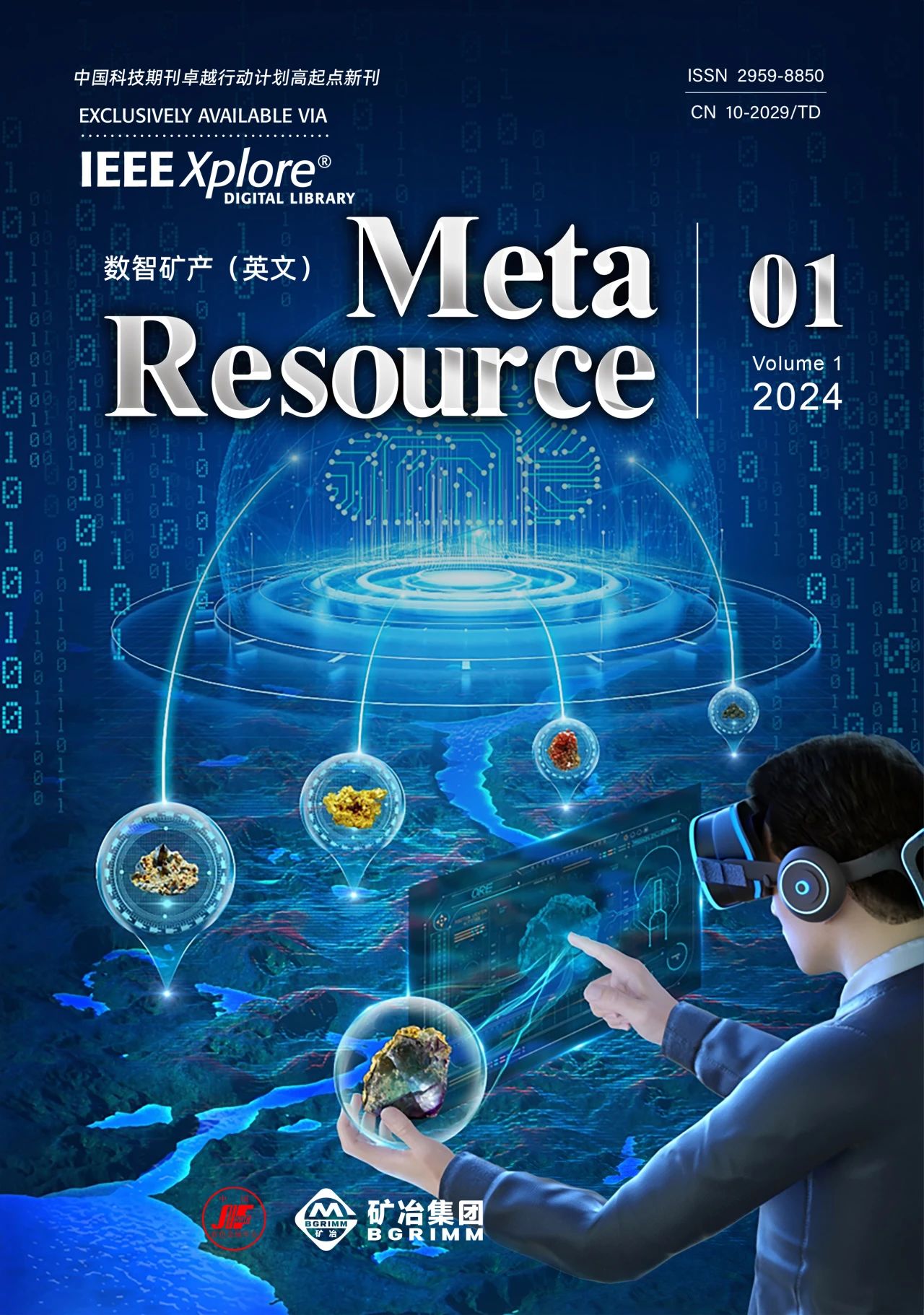
数智矿产(英文)(MetaResource)(OA期刊)(不收版面费)
CN外文 - 季刊
  • 数智矿产(英文)(MetaResource)(OA期刊)(不收版面费)
  • 复合影响因子:0
  • 国级普刊
  • 知网,维普目次
  •  
  投稿方式:官网投稿
  • 栏目频次
  • 一作占比
  • 单位占比
  • 热词
暂无栏目信息.
暂无一作信息.
暂无单位信息.
暂无关键词信息.
  • 更多

    期刊简介

  • 《数智矿产(英文)》(MetaResource)(季刊)创刊于2024年,由中国科学技术协会主管、中国有色金属学会、矿冶科技集团有限公司主办。主要聚焦新兴技术与战略性矿产资源交叉融合的前沿领域,刊发采矿、选矿和冶金数智化方面的理论进展、最新研究成果与技术应用案例。

  • 基本信息

  • 期刊名称:数智矿产(英文)(MetaResource)(OA期刊)(不收版面费)
  • 主管单位:中国科学技术协会
  • 主办单位:中国有色金属学会、矿冶科技集团有限公司
  • 国内刊号:CN 10-2029/TD
  • 国际刊号:ISSN 2097-6445;e-ISSN 2959-8850
  • 出刊日期:
    期刊定价:
  • 邮发代码:
  • 所在省区:北京
    邮政编码:
  • 联系地址:

  • 投稿信息

  • 学科分类:矿业工程
    版面费用:不收版面费
  • 字数要求:0
    查重要求:-
  • 复合因子:0
    综合因子:0
  • 审  稿 费:待核实
    稿费:待核实
  • 本刊可发:
  • 特殊属性:外文期刊

  • 联系方式

  • 投稿网址:https://mc03.manuscriptcentral.com/MetaR
  • 官网网址:https://ykcbmr.cbpt.cnki.net/
  • 电话传真:010-63299747(微信公号信息)
  • 电子邮箱:MetaResource@bgrimm.com;qinkun@bgrimm.com
  • 微信公众号:矿冶期刊汇

审稿时间:暂无参考数据,审稿时间不确定!

投稿难度:网友分享,仅供参考

见刊周期:-

温馨提示以上只是参考信息,实际情况会根据投稿主题、稿件质量和数量、审稿流程有所差异。想获得更准确信息请联系期刊的编辑部进行咨询。

欢迎点评!让信息更透明,使投稿更轻松!
    • 审稿时间:
      是否录用:
    • 发表排期:
      查重要求:
    • 有无课题:
      有无回复:
    • 我的学历:
      我的职称:
    • 审稿费用:
      版面费用:
    • 稿       费:
      稿件字数:
    • 投稿难度:
    • 该刊可发:
    • 投稿主题:
匿名: 验证码: 点击切换验证码
    • 1、投稿方式:在线投稿。

      2、官网网址(主办单位微信公号信息):

      https://ykcbmr.cbpt.cnki.net/

      https://ieeexplore.ieee.org/xpl/RecentIssue.jsp?punumber=10750448

      3、投稿网址:https://mc03.manuscriptcentral.com/MetaR

      4、联系电话:010-63299747(微信公号信息)

      5、官网邮箱:

      MetaResource@bgrimm.com

      qinkun@bgrimm.com

      6、出刊日期:季刊,一年出版四期。

      7、主办单位微信公号:矿冶期刊汇

      8、创刊前期免收版面费。

      2025年2月11日星期二

      《数智矿产(英文)》关于我们

      【主办单位官方微信公众号信息】

      矿冶期刊汇 2025年01月24日 13:45 北京

      期刊简介

      为突破传统资源行业的限制,促进新兴前沿技术与战略性矿产资源领域的深度融合,矿冶科技集团有限公司联合中国有色金属学会共同发起创建跨学科科技期刊——《MetaResource》(数智矿产)。《MetaResource》是中国科技期刊卓越行动计划高起点新刊,于2024年正式创刊,季刊,ISSN 2959-8850,CN 10-2029/TD,通过IEEE Xplore发行。中国工程院院士、矿冶科技集团有限公司首席科学家、矿冶过程智能优化制造全国重点实验室主任沈政昌,开普敦大学矿物研究中心主任David Deglon教授共同担任期刊主编。《MetaResource》致力于打造成为传播创新成果、引领新兴技术与战略性矿产资源交叉前沿方向的高水平国际一流英文科技期刊。

      收稿范围

      《MetaResource》主要聚焦新兴技术与战略性矿产资源交叉融合的前沿领域,刊发采矿、选矿和冶金数智化方面的理论进展、最新研究成果与技术应用案例。收稿范围包括但不限于:◾理论发展:推动矿产资源开发利用领域科技进步的理论;◾分析方法:用于理解、解释和评估与矿产资源相关的数据和现象的分析技术与方法;◾数值模拟方法:用于设备和工艺建模、模拟及预测的数值方法和算法;◾控制科学与工程:应用控制理论与工程原理实现对矿产资源开采与加工的系统优化和自动化;◾人工智能与信息技术:数据挖掘、机器学习、预测分析、数据管理、软件开发以及网络技术在矿产资源开发利用领域的应用;◾数字孪生与虚拟现实技术:数字孪生与虚拟现实等任何可能推动矿产资源开发利用领域发展的新型数字技术。

      期刊亮点

      《MetaResource》使用Clarivate Analytics旗下的ScholarOne投审稿系统和IEEE Xplore权威学术资源平台,创刊前期面向全球免费开放获取。◾创刊前期免收版面费◾双盲同行评议◾审稿高效迅速◾专业编辑与润色服务◾录用稿件发放稿酬◾定期评选优秀论文◾每期遴选封面论文◾融媒体宣传矩阵《MetaResource》坚持“学科交叉、创新发展”的原则,面向矿产资源领域科技工作者、技术管理人员征稿。我们衷心地希望您和您的团队不吝赐稿,向世界展示中国(海内外)学者在资源领域应用研究的特色和水平,进一步增强我国该领域的国际影响力,推动我国从资源利用科技大国走向科技强国。

      联系我们

      邮箱:MetaResource@bgrimm.com电话:010-63299747地址:北京市丰台区南四环西路188号总部基地18区22号楼网址:https://ykcbmr.cbpt.cnki.net/https://ieeexplore.ieee.org/xpl/RecentIssue.jsp?punumber=10750448投稿链接:https://mc03.manuscriptcentral.com/MetaR

      Guides for authors

      【官网信息】

      2024-12-17 08:57:07

      About this journal

      MetaResource,

      aims to provide publication of latest developments in cutting-edge

      techniques research and application in mining, mineral processing and

      extractive metallurgy. The journal topics cover theoretical

      developments, analytical methods, numerical simulation methods, control

      science and engineering, artificial intelligence, information

      technology, computer interdisciplinary applications and other digital

      and numerical simulation techniques which would bring promotion in the

      development of mineral resources.

      The

      journal considers full length article, short communications,

      perspective, review articles and paper previews, and publishes 4 issues

      per year.

      The recommended research and application fields including but not limited to the following:

      (1)

      Theoretical Developments: advancements in theoretical frameworks and

      concepts that drive scientific and technological progress in the fields

      of mineral resources;

      (2)

      Analytical Methods: various analytical techniques and procedures used

      to understand, interpret, and evaluate data and phenomena related to

      mineral resources;

      (3)

      Numerical Simulation Methods: numerical methods and algorithms used for

      modeling, simulation, and prediction of physical equipment and

      processes;

      (4)

      Control Science and Engineering: the application of control theory and

      engineering principles to optimize and automate mineral resource

      extraction and processing systems;

      (5)

      Artificial Intelligence and Information Technology: data mining,

      machine learning, predictive analytics, data management, software

      development, and networking technique applications in the fields of

      mineral resources;

      (6)

      Digital Twin and Virtual Reality Techniques: any new digital techniques

      like Digital Twin and Virtual Reality that may bring advancements in

      the development of mining, mineral processing and extractive metallurgy.

      Manuscript submission

      Submission

      of a manuscript implies: that the work described has not been published

      before; that it is not under consideration for publication anywhere

      else; that its publication has been approved by all co-authors, if any,

      as well as by the responsible authorities – tacitly or explicitly – at

      the institute where the work has been carried out. The publisher will

      not be held legally responsible should there be any claims for

      compensation.

      Authors

      wishing to include figures, tables, or text passages that have already

      been published elsewhere are required to obtain permission from the

      copyright owner(s) [the publisher(s) of the journal, not the authors of

      the paper] for both the print and online format and to include evidence

      that such permission has been granted when submitting their papers

      (Reprinted with permission from Ref. [xx]. Copyright XXXX, Publisher).

      Any material received without such evidence will be assumed to originate

      from the authors. It is the authors’ responsibility to retain an

      electronic or hardcopy of the permission.

      The

      manuscript should be submitted online via the journal’s website, or

      directly through the ScholarOne Manuscript System

      (https://mc03.manuscriptcentral.com/MetaR). Complete instructions and an

      overview of the electronic online submission process are available

      through the general submission site. Please ensure you provide all

      relevant editable source files, including a single MS Word

      (recommended), or PDF file that contains the text, all figures and

      tables, and any Supplementary Information associated with the

      manuscript. Failing to submit these source files might cause unnecessary

      delays in the review and production process.

      To

      help speed up the review process, authors are requested to provide at

      least 3 potential reviewers, and ensure that their reviewer suggestions

      do not include any researchers with whom they have recent or on-going

      collaborations or other close ties. Each manuscript should also be

      accompanied by a cover letter that summarizes the main findings of the

      work and its novelty, and the highlights are suggested to list as items

      in cover letter.

      Categories of contributions

      Articles

      (~7–10 journal pages, approximately 6000 words and not more than ten

      display items such as figures, tables, or schemes, not less than 30

      references) are peer-reviewed, in-depth reports of outstanding novel

      findings which also have important and general implications for

      specialists working in other fields. The Introduction should summarize

      the reasons for undertaking the work and the main conclusions which can

      be drawn. The Experimental should give the sufficient detail (such as

      main materials, processes, and measurements) to enable others to repeat

      and compare your work. Then it is the Results and Discussion section.

      The final Conclusion should summarize the major conclusions of the

      paper. In addition, a short abstract (at least 150 words) and a maximum

      of six keywords should be included. Supplementary Information in the

      form of additional figures, experimental details, movies, and so on may

      accompany a manuscript, and will be published online only. This material

      will not be edited, so should be error free.

      Letters

      (~4–6 journal pages, approximately 2500 words excluding references, not

      more than four display items such as figures, tables, or schemes, not

      less than 30 references) are unsolicited, peer-reviewed short reports of

      outstanding novel findings that also have important and general

      implications for specialists working in other fields. The research

      reported in a Letter must stand on its own in the absence of its

      Supplementary Information. The first paragraph should summarize the

      reasons for undertaking the work and the main conclusions which can be

      drawn. The final paragraph should summarize the major conclusions of the

      paper. The essential findings presented in a Letter should be novel and

      should not have been published previously. Supplementary Information in

      the form of additional figures, experimental details (optional in text

      or Supplementary Information), movies, and so on may accompany a

      manuscript, and will be published online only. This material will not be

      edited, so should be error free.

      Reviews

      (at least 15,000 words in length, divided into appropriate sections,

      and 15–20 display items such as figures, tables, or schemes, not less

      than 100 references) are peer-reviewed and give a general overview of a

      particular field, providing the reader with an appreciation of the

      importance of the work, a summary of recent developments, and a guide to

      the relevant literature. The Introduction should introduce

      non-specialists to the subject in a clear manner. A Review should

      conclude with a section titled "Summary and Outlook", in which the

      achievements and new challenges of the subject are presented succinctly.

      Biographical sketches (approximately 100 words) and portrait

      photographs (≥300

      dpi) of the corresponding authors should be submitted. In addition, a

      short abstract (at least 150 words) and a maximum of six keywords should

      be included.

      Mini

      reviews (at least 8,000 words in length, divided into appropriate

      sections, and 5–10 display items such as figures, tables, or schemes,

      not less than 60 references) are peer-reviewed and provide a critically

      selected overview of recent progress in important research fields. It is

      not intended that the articles should be comprehensive, but rather

      insightful, selective, critical, opinionated, and even visionary. The

      Introduction should introduce non-specialists to the subject in a clear

      manner. A Mini review should conclude with a section titled "Summary and

      Outlook", in which the achievements and new challenges of the subject

      are presented succinctly. Biographical sketches (approximately 100

      words) and portrait photographs (≥300

      dpi) of the corresponding authors should be submitted. In addition, a

      short abstract (at least 100 words) and a maximum of six keywords should

      be included

      Perspectives

      (2-3 journal pages, approximately 1500 words and not more than two

      display items such as figures, tables, or schemes, not more than 15

      references) are concise reports on recent exciting research of interest

      to MetaResource-related materials scientists worldwide, including

      discussions of research breakthroughs and interpretations of important

      science and funding policies. They may provide context for the findings

      within a field or explain potential interdisciplinary significance.

      Perspectives should have no more than two authors.

      Highlights

      (2-3 journal pages, approximately 1500 words and not more than two

      display items such as figures, tables, or schemes, not more than 15

      references) describe very important new results of original research

      (preferably published online within the last month), in general given by

      a third person, with a view to instruct and to highlight their

      significance of the findings. The results should be presented clearly

      and as succinctly as possible, without the comprehensive details

      required for an original article. Highlights should have no more than

      two authors, who should not have affiliations with the author(s) of the

      work being highlighted.

      Letters, Perspectives, and Highlights should have no section headings in the main text.

      Authorship

      Authorship

      should be limited to those who have contributed substantially to the

      work, and every author has responsibility for the data and argument

      mentioned in the paper. Author contributions should be specified in the

      manuscript. The corresponding author must have obtained permission from

      all authors for the submission of each version of the paper and for any

      change in authorship. In addition: changes of authorship (including

      affiliation, order of the authors, adding or deleting authors) are not

      accepted after acceptance of a manuscript; request to add or delete

      authors at revision stage or after publication is a serious matter, and

      may be considered only after receipt of written approval from all

      authors and detailed explanation about the role/deletion of the

      new/deleted author. The decision on accepting the change rests with the

      Editor-in-Chief of the journal; upon request authors should be prepared

      to send relevant documentation or data in order to verify the validity

      of the results.

      ……

      更多详情:

      https://ykcbmr.cbpt.cnki.net/portal/journal/portal/client/news/daaf0e57920f1a3b43cc305406bf1046


    验证码: 点击切换验证码